
sustainablesolutions.env@gmail.com

Understanding Scope 1, 2, and 3 Carbon Emissions
Unlock the full picture of your company’s environmental impact and pave the way for a sustainable future.
Why Carbon Emissions Matter: The Business and Planetary Stakes

Driving Climate Change
Carbon emissions account for 81% of global greenhouse gases, fueling climate change risks like extreme weather, food insecurity, and economic disruption.
Business Responsibility
Businesses bear a significant share of emissions and face increasing pressure from regulators, investors, and consumers to measure and reduce their carbon footprint.
Global Standard Framework
The Greenhouse Gas Protocol’s scopes 1, 2, and 3 provide the global standard framework to understand and comprehensively address emissions.
Scope 1 Emissions: Direct Emissions You Control
Scope 1 emissions represent the direct greenhouse gas (GHG) emissions from sources owned or controlled by your company. These are the emissions you have the most immediate control over and are often the easiest to measure.
Onsite Fuel Combustion
Emissions from burning fuel in boilers, furnaces, and other stationary equipment at your facilities. This includes natural gas, oil, or coal used for heating or power generation.
Company-Owned Vehicles
Emissions from the combustion of fuel in company cars, trucks, vans, and any other vehicles owned or leased by the organization.
Fugitive Emissions
Intentional or unintentional releases of GHGs from sources such as refrigerant leaks from air conditioning units, methane leaks from oil and gas operations, or other industrial processes.
Industrial Process Emissions
GHG emissions directly released from manufacturing processes, like the CO2 produced during cement manufacturing or chemical reactions in industrial facilities.
Understanding and reducing Scope 1 emissions is a crucial first step in any comprehensive carbon management strategy, as they reflect your most direct environmental impact.
Scope 2 Emissions: Indirect Emissions from Purchased Energy
Scope 2 emissions are indirect greenhouse gas emissions resulting from the generation of purchased electricity, steam, heating, or cooling consumed by your company. While these emissions occur at the utility provider’s facility, they are a direct consequence of your energy consumption.
Definition:
Emissions generated offsite during the production of electricity, steam, heating, or cooling that a company purchases.
Examples:
Electricity powering office buildings, heating systems, or manufacturing plants are common sources of Scope 2 emissions.
Calculation Methods
Calculated based on metered energy consumption combined with supplier-specific or grid-average emissions factors. Businesses can use both location-based and market-based methods for reporting.
Impact Reduction
These significant emissions can be reduced by switching to renewable energy sources through Power Purchase Agreements (PPAs) or by investing in on-site renewable energy generation, as well as improving overall energy efficiency.
Addressing Scope 2 emissions is a powerful way to reduce your carbon footprint, often through strategic energy procurement and efficiency improvements.
Scope 3 Emissions: The Vast and Complex Value Chain Footprint
Scope 3 emissions are the most expansive category, representing all other indirect emissions not covered in Scope 2. These occur throughout a company’s entire value chain, both upstream and downstream. This scope typically accounts for the vast majority—around 88-90%—of a company’s total emissions.
Upstream Examples:
- Emissions from suppliers’ production of purchased goods and services.
- Business travel (air, rail, road).
- Employee commuting.
- Waste generated in operations.
- Transportation and distribution (by third parties).
Downstream Examples:
- Emissions from the use of sold products.
- End-of-life treatment of sold products.
- Franchises and investments.
- Leased assets (if not covered in Scope 1 or 2).
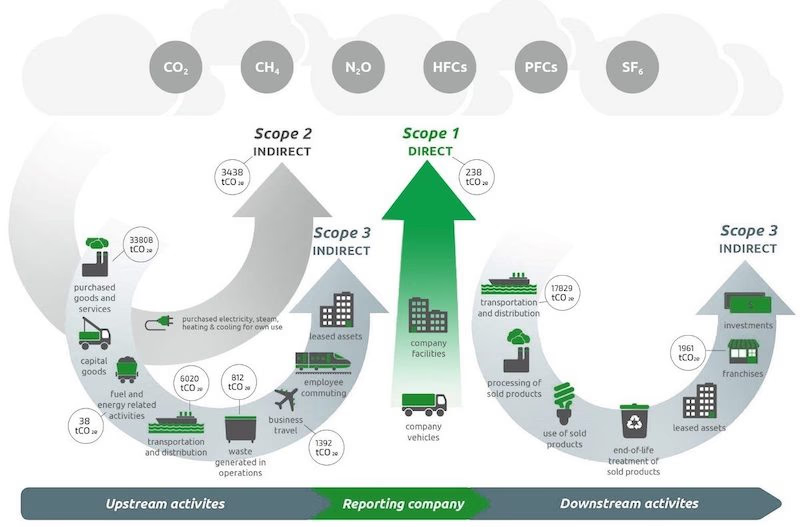
Visualizing the Emissions Chain: Direct vs. Indirect Emissions
To truly grasp your organization’s carbon footprint, it’s essential to visualize the distinct categories of emissions. Our comprehensive infographic breaks down the complex journey of greenhouse gases, from direct sources within your control to the far-reaching impacts across your entire value chain.
- Scope 1 Emissions: Direct emissions originating from sources owned or controlled by your company, such as on-site fuel combustion and company vehicle fleets.
- Scope 2 Emissions: Indirect emissions tied to the generation of purchased electricity, heating, and cooling, occurring off-site but directly linked to your energy consumption.
- Scope 3 Emissions: The most extensive category, encompassing all other indirect emissions throughout your company’s value chain, both upstream and downstream, from supplier activities to product end-of-life.
This visual breakdown illustrates how these scopes interlink, providing a holistic view of your environmental impact and highlighting areas for strategic intervention.

Take Action: Measuring Your Full Carbon Footprint to Drive Net Zero
Understanding and reporting your Scope 1, 2, and 3 emissions is the essential first step toward credible climate action and achieving net-zero goals. It’s no longer enough to just manage direct emissions; a holistic approach is crucial for long-term sustainability and business resilience.
Your company’s journey to a sustainable future begins with knowing your full emissions story. Start today to contribute to global climate goals and secure your place in a low-carbon economy.